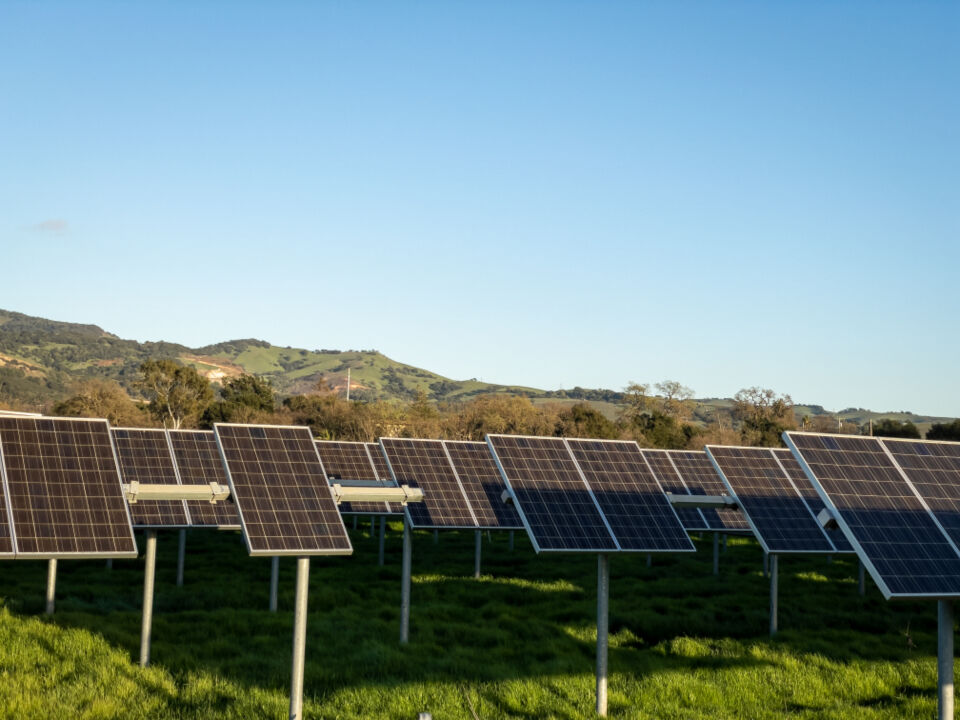
Home Solar Batteries and the Cheaper Home Batteries Program
Home batteries let you store solar power made during the day and use it at night. For a long time the upfront cost put them out of reach for many households. The federal Cheaper Home Batteries Program, which began on 1 July 2025, set out to change that. It offers a discount of around 30 per cent on eligible batteries installed with solar.
The program has changed since it started. From 1 May 2026, the discount is staggered by battery size and it falls at set points over time. This guide explains how the discount works now and what makes a battery eligible. It also covers what to check before you sign a contract.
What the Cheaper Home Batteries Program offers
The program is run by the Department of Climate Change, Energy, the Environment and Water. It is open to households, businesses and community organisations across Australia. According to business.gov.au, the discount is up to 30 per cent of the upfront cost of installing a small scale battery. The program is listed as closing on 31 December 2030.
The discount works through the existing Small-scale Renewable Energy Scheme. An eligible battery creates small scale technology certificates based on its usable capacity. Most people assign those certificates to a registered agent, who takes the value off the price. You see this as a lower quoted price rather than a cash payment later.
The program has grown quickly. The Minister for Climate Change and Energy announced that more than 155,000 households and small businesses took part in under six months. Funding was expanded to an estimated $7.2 billion over four years. The government expects more than 2 million Australians to install a battery by 2030.
Which batteries are eligible
Not every battery qualifies. The Clean Energy Regulator sets out a list of conditions on its solar batteries page. These are the main ones a household needs to know about.
- The battery must be on the Clean Energy Council approved battery list.
- It must be installed by a Solar Accreditation Australia accredited installer with battery endorsement.
- It must be installed with a new or existing solar PV system.
- If it is connected to the grid, it must be technically capable of joining a virtual power plant.
- Its nominal capacity must be between 5 and 100 kWh.
The battery must also be new, and only one battery per premises is eligible. Retailers have to give an assurance that the battery is for permanent use and will not be moved or resold. The Regulator says the battery must stay at the property for the warranty period or until the end of 2030, whichever is later. Keep this in mind if you are thinking about selling your home soon.
How the discount changes with battery size
Since 1 May 2026, larger batteries get less support for each extra kilowatt hour. Only the first 50 kWh of usable capacity can earn certificates. The Clean Energy Regulator sets out three tiers. Each tier applies a percentage of the full certificate factor.
Capacity from 0 up to 14 kWh earns the full factor. Each kWh above 14 and up to 28 kWh earns 60 per cent of the factor. Each kWh above 28 and up to 50 kWh earns just 15 per cent. In plain terms, a typical home battery gets the most help for each kWh, while a very large system gets much less.
This matters when you compare quotes. A bigger battery may not be worth the extra money if most of the added capacity sits in the reduced tiers. Think about how much power you actually use in the evening and overnight. A battery that matches your needs is usually better value than the largest one on offer.
Why timing affects the discount
The certificate factor is set for each period in advance and drops over time. The Regulator lists a factor of 8.4 for January to April 2026 and 6.8 for May to December 2026. It then falls to 5.7 for January to June 2027. By July to December 2030 it reaches 2.1.
The reason given is falling battery prices. As batteries get cheaper, the support shrinks in step. This means the same battery earns a smaller discount if it is installed later. Your quote should be based on the period when the installation actually happens.
Planning other green upgrades around the same time can save on disruption. Storing your own power is a natural partner to using less of everything else. Our piece on water conservation strategies shows how large sites approach saving resources. The same thinking scales down to an ordinary home.
Getting quotes and signing a contract
The Clean Energy Regulator recommends getting several quotes and comparing the systems offered. Check that the battery is on the approved list and meets Australian standards. On installation day, confirm the installer’s accreditation and licence. The Regulator also suggests a yearly safety check by a licensed, accredited electrician.
The Energy and Water Ombudsman NSW has also published tips since the May 2026 changes. Make sure your quote and contract clearly show the discount you qualify for. Confirm when the installation will happen and exactly what the contract includes. Retailers and installers should be upfront about pricing and timeframes.
If something goes wrong, the energy ombudsman in your state or territory may be able to help. The Clean Energy Regulator also carries out inspections and can take compliance action. Some state governments run their own battery rebates or loans on top of the federal discount. Check your state energy department before you buy.
Fitting a battery into a greener home
Your accredited installer will advise where the battery can safely go. Leave clear access for servicing and plan the space before other outdoor work starts. If you are redesigning the yard, our article on the advantages of landscape design explains why planning first pays off. A layout that suits the house makes later upgrades simpler.
Low impact choices elsewhere add up too. Even small jobs like marking out a driveway or play area have greener options. Our guide to water based line marking compares the choices. For more ideas outdoors, try these landscape design themes.
Frequently asked questions
Do I need solar panels to get the battery discount?
Yes. The battery must be installed with a new or existing solar PV system. You can add solar and a battery at the same time. The battery must also be on the approved list and installed by an accredited installer.
How big a battery is covered?
Batteries between 5 and 100 kWh nominal capacity can be eligible. Only the first 50 kWh of usable capacity earns certificates. Support per kWh falls above 14 kWh and again above 28 kWh.
Will the discount get smaller?
Yes. The certificate factor is set for each period and falls over time to reflect falling battery prices. The program is listed as closing on 31 December 2030.
Can I take the battery with me if I move?
No. The battery must stay at the property for the warranty period or until the end of 2030, whichever is later. Retailers must also confirm it is for permanent use and will not be resold.
Author





 Heat Pump Hot Water Systems for Australian HomesOctober 2, 2026How heat pump hot water systems work, tank sizing, noise, cold weather, solar timers and small scale technology certificates explained. […]
 Eco-friendly paint options for a healthier homeNovember 2, 2025These days, lots of people are trying to cut back on […]
 Low maintenance decking for Perth heat: fade, scratch and slip resistance explainedSeptember 11, 2025If you live in Perth then you are well aware of the […]
 How Perth WA Town Planners Are Reshaping Sustainable Development StandardsAugust 28, 2025Perth’s development game has changed completely […]
 Sourcing Materials for a Sustainable FenceJuly 5, 2025Some people don’t consider timber fencing to be […]
 Reducing Environmental Impact: Water-Based vs Solvent-Based Line Marking SolutionsMarch 29, 2025With my many years of experience in line marking in […]
 7 Ways Homeowners Can Use Landscaping To Boost Their Green CredentialsAugust 14, 2024Some people might think that by simply having […]