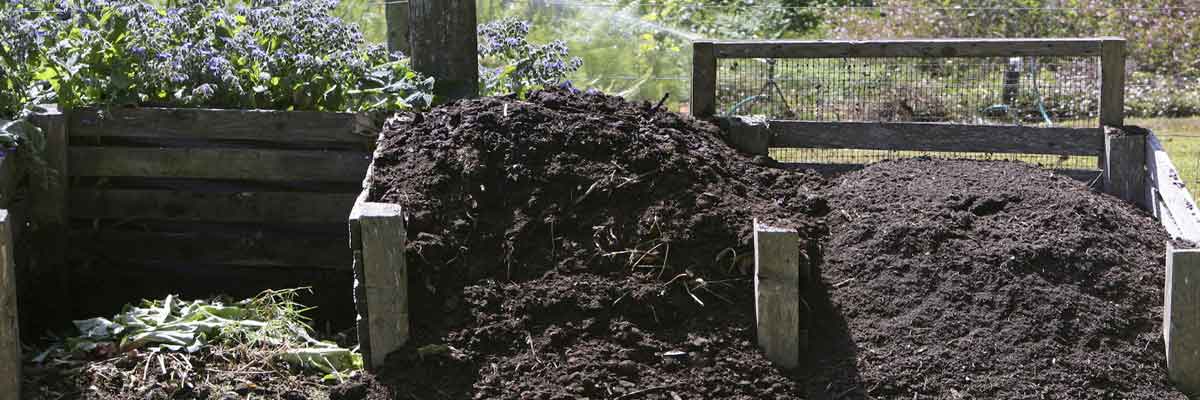
How to Start a Compost Pile
Here we are cruising into April which means many parts of the country are experiencing the first warm days of spring. Also arriving is the annual spring cleaning of yards across America as people deal with the remaining fallen leaves of last autumn and mow down their lawns for the first time this year.
Of course we here at Groovy Green advocate strongly for turning those Lawns into Gardens and if you must retain some turf try a manual reel mower. They’re cheap, use no fuel (other than that of your muscles), have no emissions, and are relatively easy to sharpen.
But if you or your neighbors do bag up all those leaves and grass clippings, consider this a prime time to start a compost pile. There’s a more in-depth article on why and how to compost here, but if you’re looking for a more simple explanation of how you can recycle your yard waste and create some great compost for your garden, here are some simple directions.
Step One: Gather leaves and grass clippings. You may have some from your own yard or you might notice neighbors hauling them out to the curb. I went a step further and found a pickup truck load of bagged leaves and grass clippings within a mile of my home last Sunday afternoon.
Step Two: Pile up your material, alternating between layers of leaves and layers of grass clippings. A good ratio of leaves to grass is about 25:1 so you’ll want to add more leaves. You’re hoping for a pile about 3′ X 3′ X 3′.
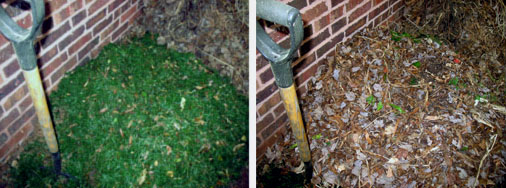
Step Three: Add water. This is best accomplished as you layer your pile. You want enough water to saturate your material but not so much that you pile is sopping wet. That will keep out oxygen, killing the beneficial bacteria ready to work for you.
Step Four: Wait. Your pile will heat up over the next few days. As it cools down (anywhere from 10 days to 3 weeks) turn the pile, which just means mixing it up to add more oxygen. This isn’t absolutely necessary but it will speed up the process.
That’s it. The pile will take more time still to completely break down into compost. How long will vary depending on the makeup of your pile and whether or not you turn it again. Be sure to add water if regular rain doesn’t.
Feel good about keeping your yard waste out of the landfill and look forward to having compost to use in your summer and fall gardens.
Author





 Eco-friendly paint options for a healthier homeNovember 2, 2025These days, lots of people are trying to cut back on […]
 Low maintenance decking for Perth heat: fade, scratch and slip resistance explainedSeptember 11, 2025If you live in Perth then you are well aware of the […]
 How Perth WA Town Planners Are Reshaping Sustainable Development StandardsAugust 28, 2025Perth’s development game has changed completely […]
 Sourcing Materials for a Sustainable FenceJuly 5, 2025Some people don’t consider timber fencing to be […]
 Reducing Environmental Impact: Water-Based vs Solvent-Based Line Marking SolutionsMarch 29, 2025With my many years of experience in line marking in […]
 The Ultimate Guide to Reducing Water Waste in Your HomeNovember 13, 2024I have been a plumber for over 38 years. After all […]
 7 Ways Homeowners Can Use Landscaping To Boost Their Green CredentialsAugust 14, 2024Some people might think that by simply having […]